


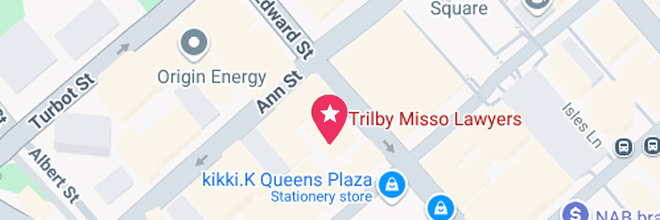
Our Brisbane CBD Office
- Suite 400, Level 4/288 Edward St, Brisbane City QLD 4000
- (07) 3910 5470

To make a WorkCover claim in Queensland, you must notify your employer of the injury, see a doctor and obtain a Work Capacity Certificate, and then lodge your claim with WorkCover Queensland within 6 months of the date of injury. That is the basic Workcover claim process Queensland workers need to follow after a work-related injury.
Most Queensland workers may be eligible to claim, but the process can become difficult if the injury is disputed, the paperwork is incomplete, or WorkCover Queensland does not accept the claim. Acting quickly, keeping records, and getting advice early can make the process easier to manage.
Quick Answer
To make a WorkCover claim in QLD: (1) notify your employer as soon as possible, preferably in writing, (2) see your doctor and get a Work Capacity Certificate, and (3) lodge your claim with WorkCover Queensland online, by phone, or through a lawyer. You generally have 6 months from the date of injury to lodge the claim.
If you are searching for how to make a Workcover claim in Queensland, the step-by-step guide below explains what to do first, what documents you need, how to lodge Workcover claim paperwork, and what happens after WorkCover Queensland assesses your application.
Under the Workers’ Compensation and Rehabilitation Act 2003 (Qld), a worker should notify their employer of a workplace injury as soon as practicable. This is one of the most important Workcover claim steps qld workers need to take after being hurt at work.
You can notify your employer verbally at first, but it is best to follow that up in writing as soon as possible. An email is usually enough. Written notice helps create a clear record of when the injury was reported, which can matter if there is later a dispute about timing or whether the injury happened at work.
Your employer should also complete an incident report. If they do not, keep your own written notes about what happened, when it happened, and who witnessed it. If your employer disputes that the injury happened at work, do not leave that issue unresolved.
The next step is to see a doctor and get a Work Capacity Certificate, which is the medical certificate needed to start a workers compensation claim qld. This document is completed by your treating GP or specialist and records the injury, diagnosis, and your capacity for work.
The doctor will state whether you have no current capacity, partial capacity, or full capacity for work. They may also outline restrictions, suitable duties, and the number of hours you can safely work. This is why the certificate is a key part of the claim process.
You do not have to use a doctor chosen by your employer. You can choose your own doctor. It is also important to get the certificate as soon as possible after the injury and keep copies of every certificate and medical record.
Once you have the Work Capacity Certificate, you can lodge Workcover claim documents with WorkCover Queensland. This is the formal step that starts the claim assessment process.
You can lodge the claim:
You will usually need:
After the claim is lodged, WorkCover Queensland will contact your employer and ask for information about the incident and employment details. Remember, you generally have 6 months from the date of injury to lodge your claim. Missing that deadline can affect your right to compensation.
After your claim is lodged, WorkCover Queensland will assess the information and decide whether the statutory claim is accepted or rejected. In most cases, WorkCover Queensland has 20 business days to make that decision.
If the claim is accepted, the worker may receive weekly compensation payments based on normal weekly earnings, payment of reasonable medical and rehabilitation expenses, and support with recovery and return to work. If the claim is rejected, there are review and appeal options, and time limits apply to those next steps.
Approval of a statutory claim does not stop a worker from later exploring a separate common law claim if the injury was caused by employer negligence. You can learn about the difference between statutory and common law WorkCover claims.
For a broader explanation of the scheme itself, see our guide to how WorkCover Queensland works.
If your claim is accepted, both you and your employer have ongoing obligations. You may need to attend medical appointments, provide updated Work Capacity Certificates, and take part in rehabilitation or return to work planning.
Employers also have obligations, including providing suitable duties where reasonably possible. Return to work should follow medical advice and actual capacity, not pressure from the workplace. If an employer is pushing a worker to return before they are medically ready, or not meeting their obligations, that issue should be addressed promptly.
Time limits are one of the most important parts of any workplace injury claim Queensland workers make. Missing a deadline can affect your rights, especially if the claim later becomes disputed.
| Claim Type | Time Limit | What Happens If You Miss It |
|---|---|---|
| Statutory WorkCover claim | 6 months from the date of injury | The claim may still be accepted in exceptional circumstances, but you lose the automatic right to have it accepted in time. |
| Common law claim (negligence) | 3 years from the date of injury | After 3 years, the right to sue for damages is generally extinguished under Queensland law. |
| Notifying your employer | As soon as practicable | Delay in reporting can be used against the worker if the injury or timeline is disputed. |
The 6-month statutory time limit should be treated as urgent, not flexible. While some late claims may still be considered, that is not guaranteed and should not be relied on.
The 3-year time limit for a common law claim is separate from the statutory WorkCover process. A worker may have both pathways available, but each has its own rules, deadlines, and evidence requirements.
A worker should strongly consider getting legal advice if the claim is disputed, delayed, rejected, or involves possible employer negligence. While some claims are straightforward, others quickly become more complex, especially where there are factual disputes, payment issues, or psychological injuries.
You should get advice if:
For more information about workplace injury claims in Queensland, see this guide. Getting advice early can be especially important where there is a dispute about liability, work capacity, weekly payments, or whether a separate common law claim may be available.
In Queensland, you generally have 6 months from the date of injury to make a statutory WorkCover claim. In some exceptional circumstances, a late claim may still be accepted, but that is not guaranteed and should not be relied on. A common law claim has a separate 3-year time limit.
A worker can still make a WorkCover claim even if the employer says the injury was the worker’s fault, because statutory claims through WorkCover Queensland are generally assessed under a no-fault scheme. Fault does not usually need to be proven for weekly payments and medical expenses. If the employer disputes how the injury happened, legal advice can be important.
A Work Capacity Certificate is the medical certificate required to lodge a WorkCover claim in Queensland. It is completed by your treating doctor and records the injury, your diagnosis, and your capacity for work. Without that certificate, WorkCover Queensland usually cannot properly assess the claim.
After you lodge a WorkCover claim, WorkCover Queensland will gather information from both you and your employer and assess the medical evidence. A statutory claim decision must usually be made within 20 business days. If the claim is accepted, weekly payments and treatment support may begin, and if it is rejected there are review and appeal pathways.
A worker can make a WorkCover claim for a psychological injury if it is work-related, including conditions involving stress, anxiety, PTSD, bullying, or harassment. These claims are often more complex and face a higher rate of dispute than physical injury claims. Early legal advice is often useful where the injury is psychological.
A worker does not always need a lawyer to lodge the initial claim, but legal advice is often important where the claim is disputed, rejected, delayed, or involves employer negligence. A lawyer can also help if the injury is psychological or the worker may have a separate common law claim. Many injured workers choose to get advice early so the claim is handled properly from the start.
An employer cannot lawfully dismiss, reduce the hours of, or otherwise disadvantage a worker simply for making a WorkCover claim in Queensland. Protections exist under Queensland law and conduct of that kind can create separate legal issues. If adverse action happens after a claim is made, urgent legal advice should be obtained.
A statutory claim is the standard WorkCover claim that may cover weekly payments and medical expenses without needing to prove employer fault. A common law claim is a separate negligence claim against the employer and requires proof that the employer caused the injury through a breach of duty. You can read more here: learn about the difference between statutory and common law WorkCover claims.
WorkCover weekly payments are generally based on the worker’s normal weekly earnings and the stage of the claim. In the first 26 weeks, many workers receive 85% of their normal weekly earnings, subject to the legislation and the facts of the claim. For more detail, see WorkCover payout amounts and what you may be entitled to.
If a WorkCover claim is rejected, the worker may be able to lodge a review and, in some situations, take the matter further to the Queensland Industrial Relations Commission. Strict time limits apply to those review steps, so the rejection should not be left unanswered. Legal advice is strongly recommended for a rejected claim.
A worker may be able to make a WorkCover claim for an injury sustained while commuting, but journey claims in Queensland have more restrictions than standard workplace injuries. Whether the injury is covered depends on the specific circumstances of the trip and how the legislation applies. Legal advice can help clarify whether the claim is likely to qualify.
A statutory WorkCover claim decision should usually be made within 20 business days of lodgement. The full period of treatment, rehabilitation, and return to work can vary depending on the severity of the injury and the worker’s recovery. If there is also a common law claim, that process can take much longer to finalise.
For the official process and requirements, you can refer to the Queensland government guide on how to lodge a WorkCover claim: https://www.worksafe.qld.gov.au/claims-and-insurance/compensation-claims/make-a-claim

Use this simple online tool and find out if you have a claim in less than thirty seconds. You can choose to remain anonymous.
Your next step is a small one. All you need to do is give us a call on 07 3910 5470 or complete this form here to arrange a quick chat.
During this initial conversation, we will:
We understand that taking legal action can be stressful, and we’ll do all we can to ease your concerns.
The chat can take place at our place, your place, or by phone. There is no cost, no pressure, and no obligation.
Call 07 3910 5470 or fill out this form, and we’ll get back to you within 2 hours (during business hours). We look forward to meeting you.
enquire now